Pompeii · AD 79 · Flavian Rome
Pompeii: The Day Vesuvius Woke
A Roman city frozen in its final hours
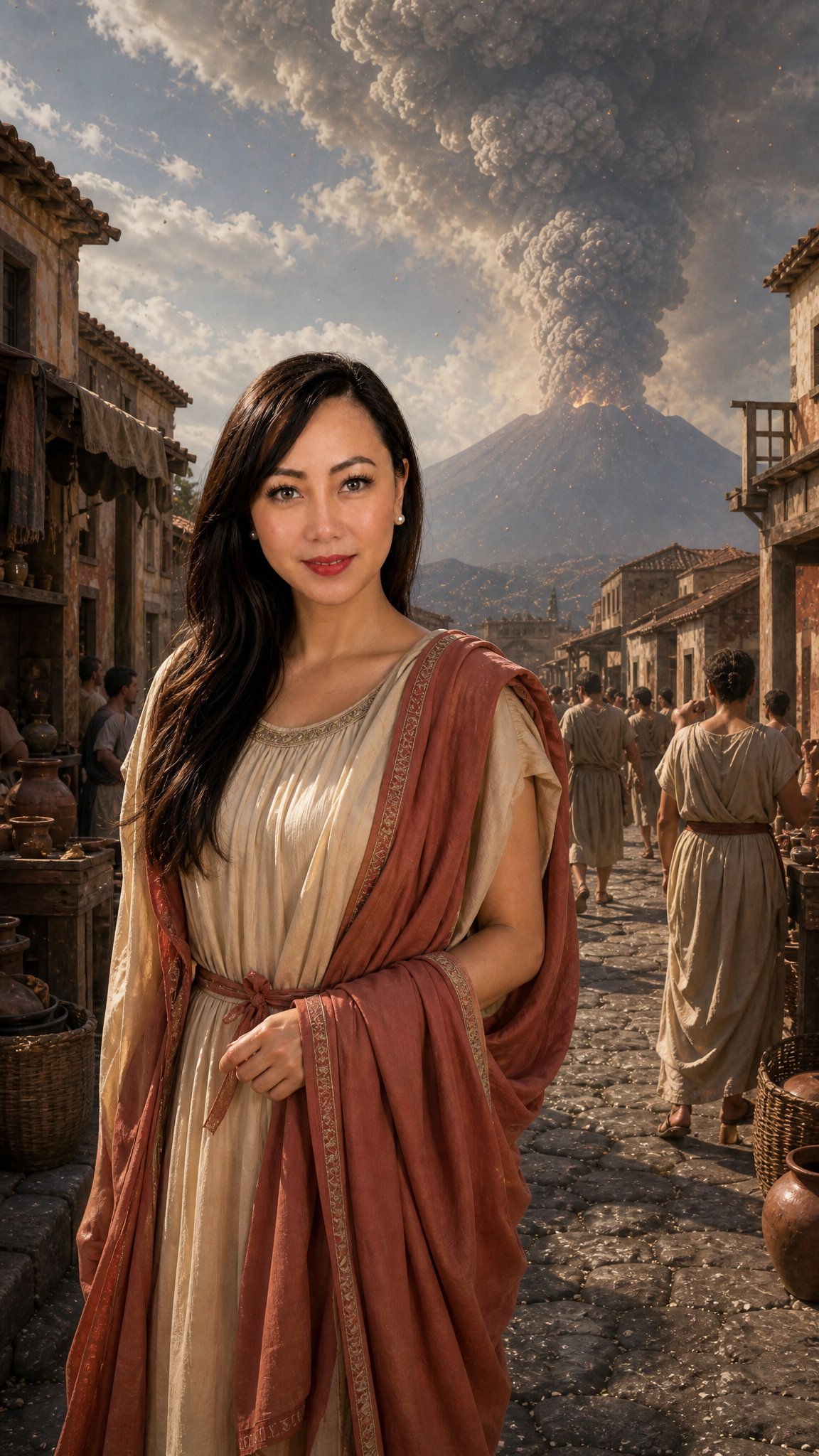
In the early afternoon of AD 79, Mount Vesuvius erupted above Pompeii. The event unfolded over approximately 32 hours, beginning with a Plinian column and heavy pumice fall before destructive pyroclastic surges reached the city the following morning.
Quick Context
The world you’ve entered
- Where
- Pompeii, Campania
- When
- AD 79
- Era
- Roman Empire · Flavian dynasty
- Why it matters
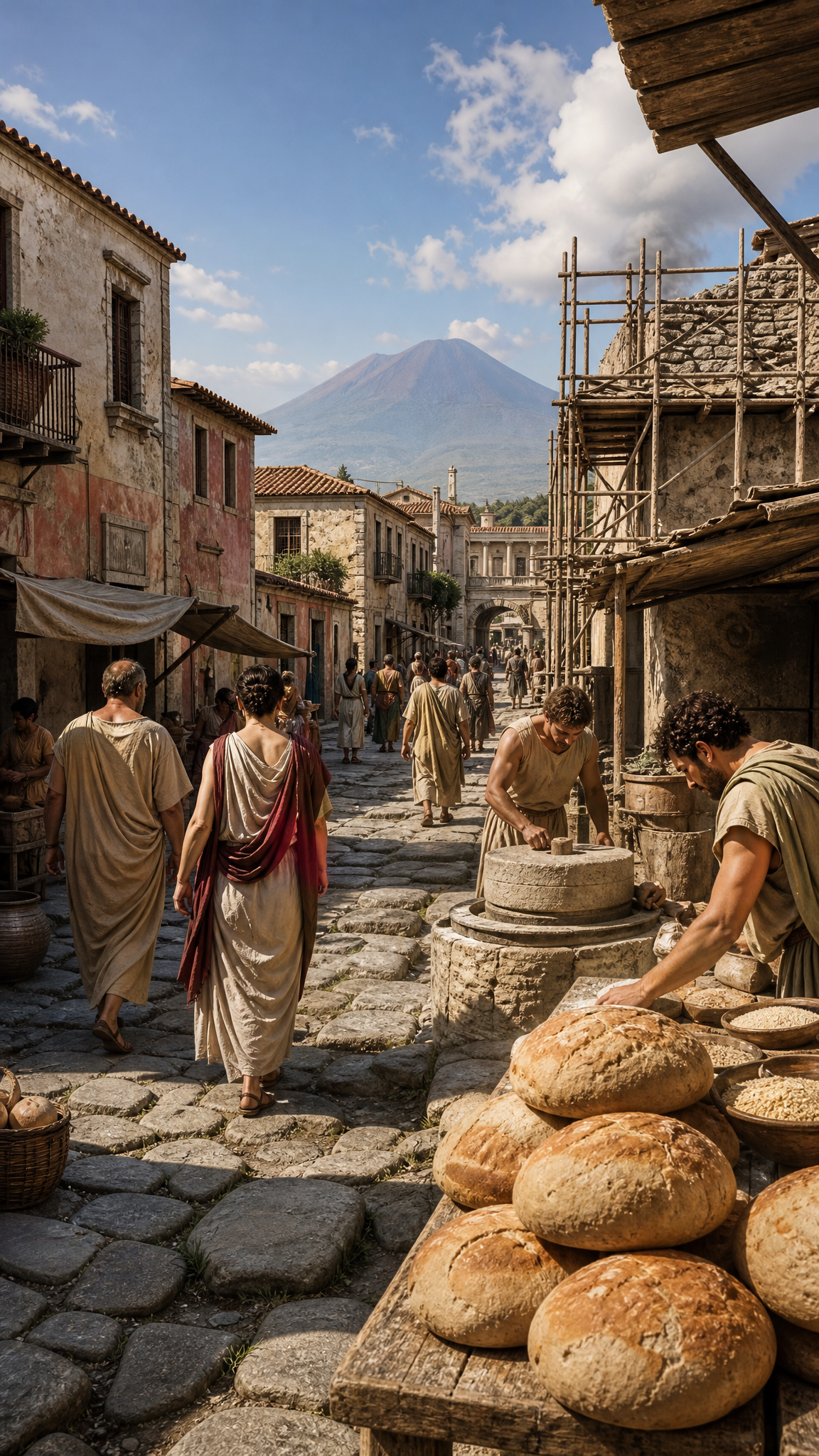
- Pompeii preserves unusually detailed evidence of Roman urban life, from workplaces and bakeries to building repairs, clothing and medical instruments.
Inside the Story
Pompeii: The Day Vesuvius Woke
Mellisa arrives on a bright Pompeii street just as a violent boom shakes the ground. Vesuvius throws a massive umbrella-pine cloud into the sky and pale pumice begins to rain onto the basalt paving.
She ducks under a doorway awning and changes into a Roman tunica and palla, securing leather soleae. A construction worker rushes from a repair site; parts of the city are still being repaired after the AD 62/63 earthquake.
She moves through streets as pumice deepens, passing a working bakery and an atrium house where medical instruments are visible. Hours later, the light has gone dark and strange. Roofs are under increasing strain and streets are harder to cross.
By the following morning, the threat changes. A dense, ground-hugging pyroclastic current reaches the city—hot volcanic gas, ash and fragmented material moving rapidly through Pompeii.
Explore the Eruption
How the day unfolded
The destruction of Pompeii was not one instantaneous event. Conditions worsened over many hours as the eruption moved through distinct phases.
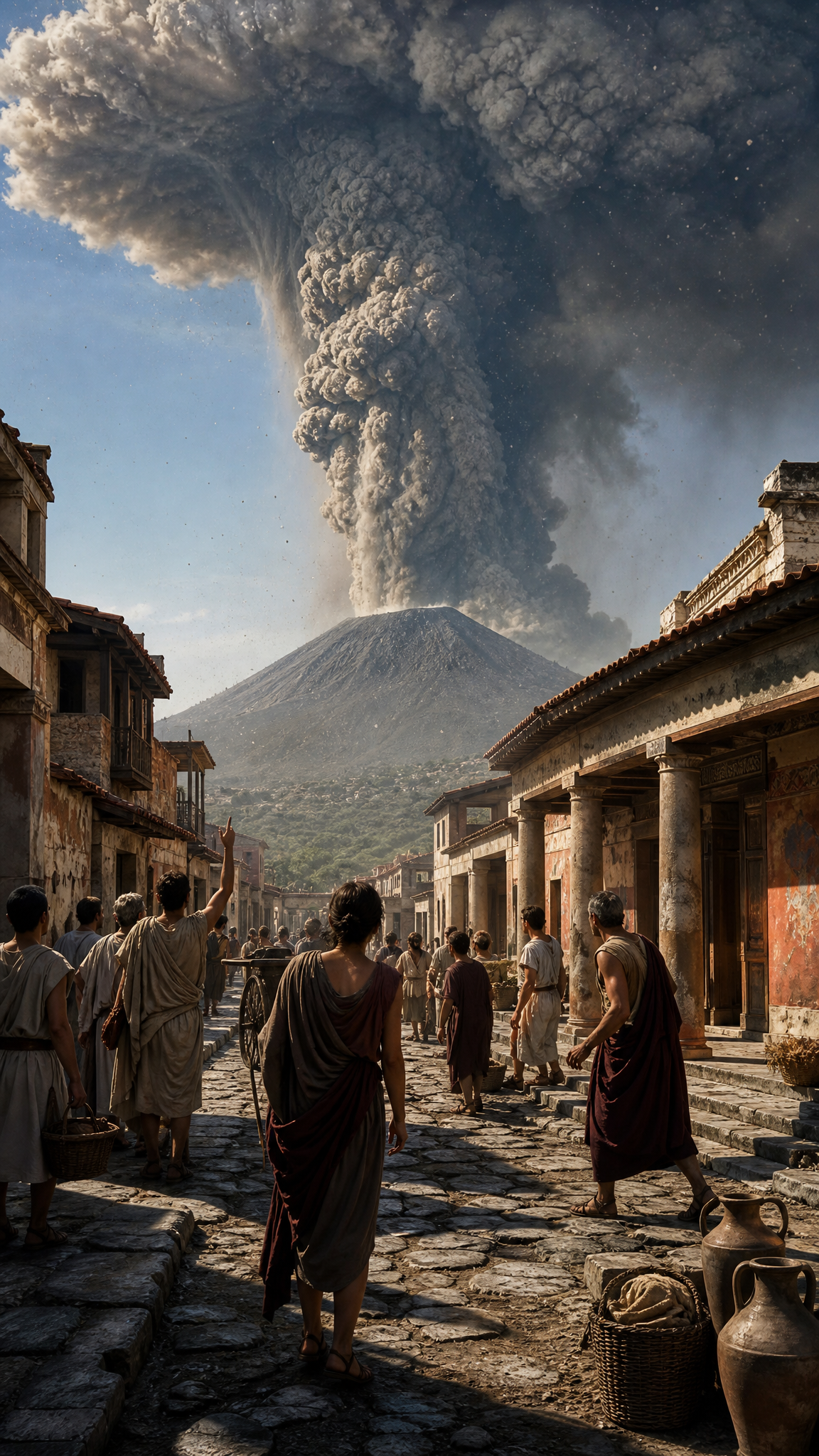
Early afternoon
The eruption begins
A towering eruption column rises above Vesuvius, throwing ash, pumice and fragmented volcanic material high into the atmosphere.
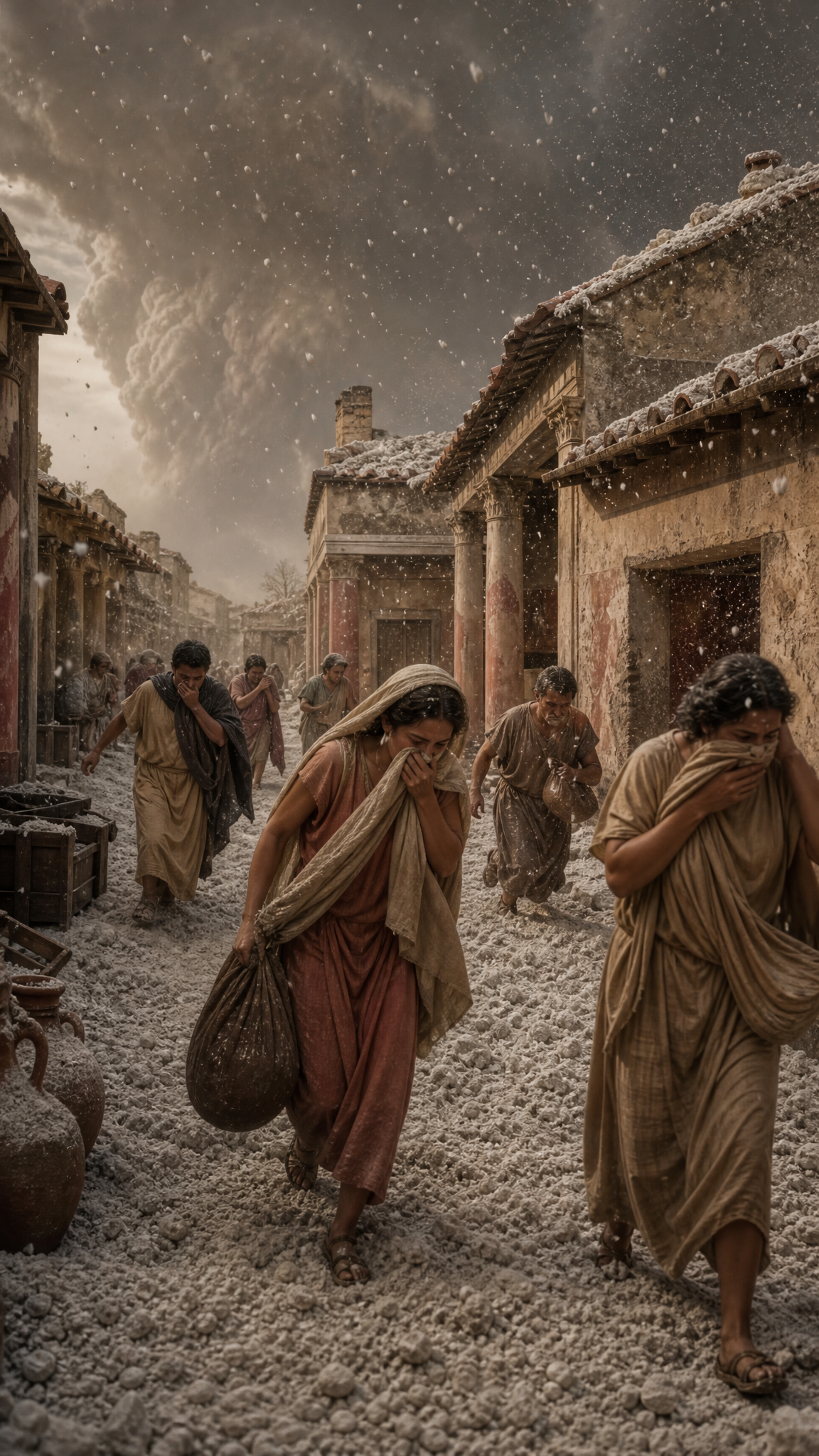
Pumice fall
The city fills with debris
Pumice accumulates across streets and rooftops. Movement becomes harder and increasing weight places buildings under greater stress.
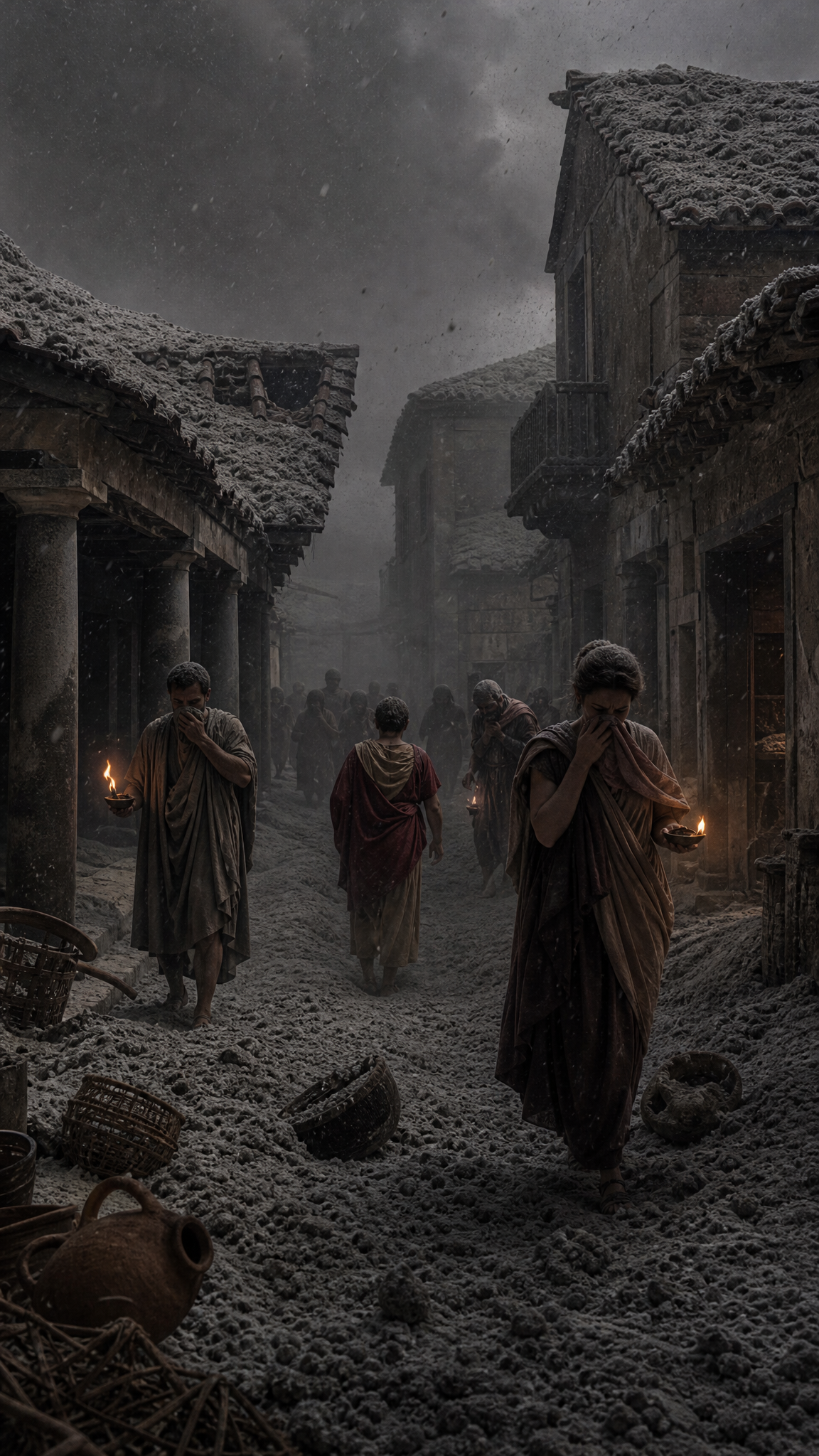
Hours later
Darkness closes over Pompeii
Fallout continues for hours. Visibility deteriorates, debris deepens and deciding whether to shelter or escape becomes increasingly dangerous.
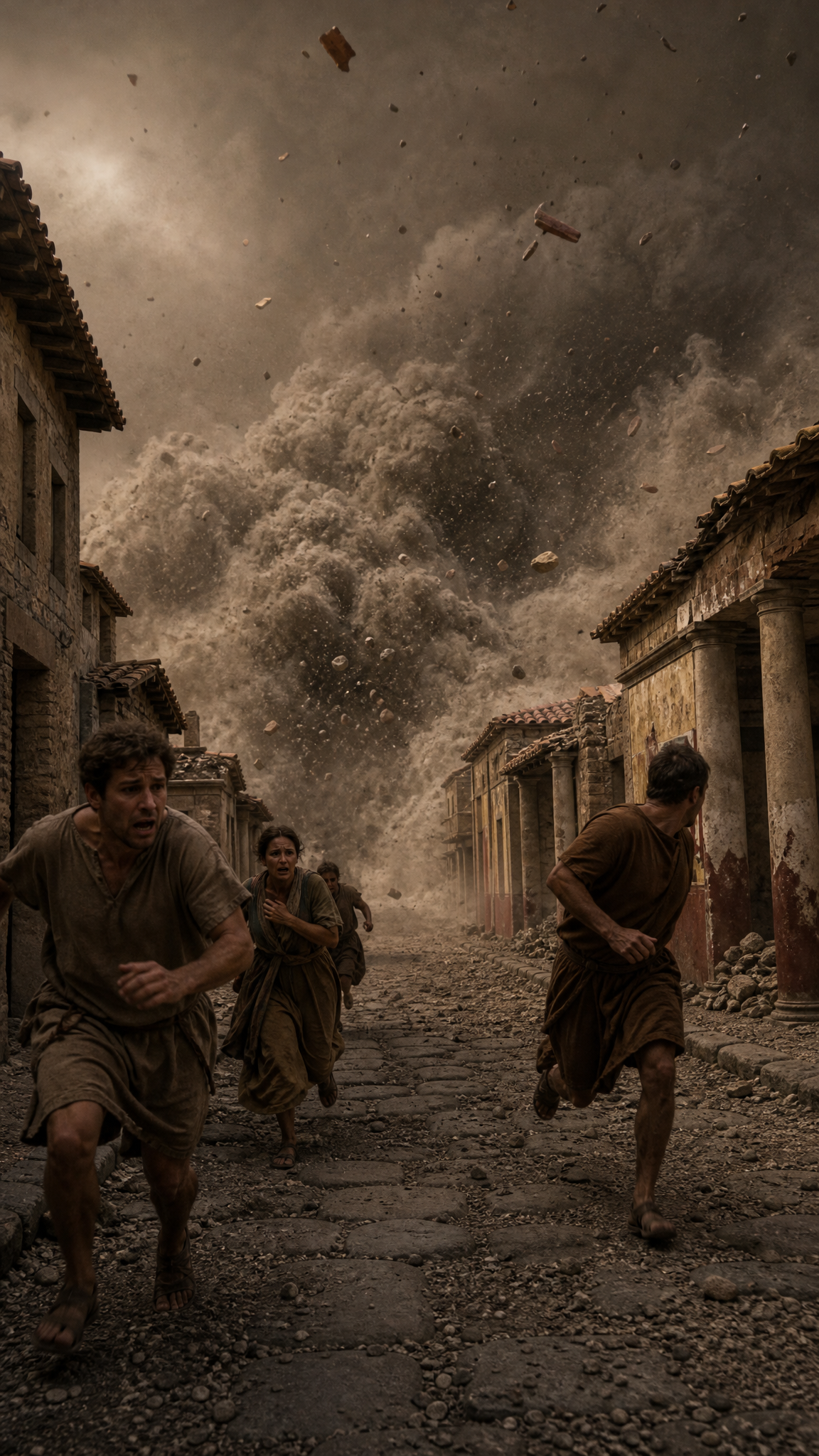
Following morning
The surge reaches the city
Pyroclastic currents reach Pompeii. These are not rivers of lava, but rapidly moving mixtures of hot volcanic gas, ash and fragmented material.
MTT Original
Watch Mellisa’s Pompeii Adventure
Start with Mellisa’s original Pompeii time-travel episode, then explore the historical evidence and surviving city behind the adventure.
Watch the History
Watch the History of Pompeii
See a short Smithsonian overview of Pompeii, then compare the city’s daily life, destruction and preservation with Mellisa’s time-travel episode.
What to notice
Watch how the Smithsonian video explains everyday life in Pompeii and what surviving ruins reveal about the people who lived there.
Compare those details with the streets, workplaces, clothing and eruption conditions explored in Mellisa’s Pompeii adventure.
Supporting video: Smithsonian Magazine. The embedded video remains hosted by YouTube and its original publisher.
What to Notice
Pompeii was a living city before it became an archaeological site
Look beyond the eruption itself. Pompeii preserves evidence of ordinary Roman life—shops, bakeries, homes, repairs, clothing, tools and medical instruments.
Also notice how the danger changes over time: first an eruption column, then heavy pumice fall, worsening darkness and structural danger, and finally destructive pyroclastic currents.
Pyroclastic currents should not be confused with flowing lava.
Visit This History Today
Walk through ancient Pompeii
The archaeological site of Pompeii allows visitors to move through surviving streets, houses, public spaces and workplaces from the Roman city buried by the eruption of Vesuvius.
Viator
Explore Pompeii Experiences
Browse guided Pompeii experiences and walking tours available through Viator.
Explore on Viator →GetYourGuide
Visit the Pompeii Archaeological Site
Browse Pompeii archaeological-site experiences and tours through GetYourGuide.
Explore on GetYourGuide →Mellisa Time Traveler may earn a commission if you book through these links, at no additional cost to you.
Behind the Adventure
How MTT Brings History to Life
Each Mellisa Time Traveler adventure begins with historical research and then translates documented details into an immersive journey through the past.
Research the History
Dates, locations, material culture, clothing and archaeological evidence are checked before the story is finalized.
Reconstruct the World
Surviving evidence from Pompeii helps shape streets, clothing, workplaces and the conditions Mellisa encounters.
Enter the Story
Historical evidence becomes an immersive time-travel experience while uncertainty is kept separate from established fact.
Creator Resources
Behind the tools
Behind MTT
See how research, storytelling and production come together.
Explore Behind MTTArtlist
Explore music and creative tools used by creators.
Explore ArtlistVideoExpress AI
Explore an AI-assisted creator tool.
Explore VideoExpress AIVideoExpress AI is an affiliate partner. Mellisa Time Traveler may earn a commission if you choose to use this link, at no extra cost to you.
Keep Traveling
A city buried. A world preserved.
Continue exploring Mellisa Time Traveler adventures.
Explore More Episodes