Giza · Ancient Egypt
The Great Pyramid of Giza
Building a wonder of the ancient world
Step into the world of Khufu, organized labor, stone, logistics and one of the most extraordinary monuments of the ancient world.
Quick Context
Enter the Old Kingdom
- Where
- Giza Plateau, Egypt
- When
- Old Kingdom · around the 26th century BCE
- Built for
- Pharaoh Khufu
- Why it matters
- The Great Pyramid is the largest pyramid at Giza and the only surviving Wonder of the Ancient World.
Inside the Story
Building on an extraordinary scale
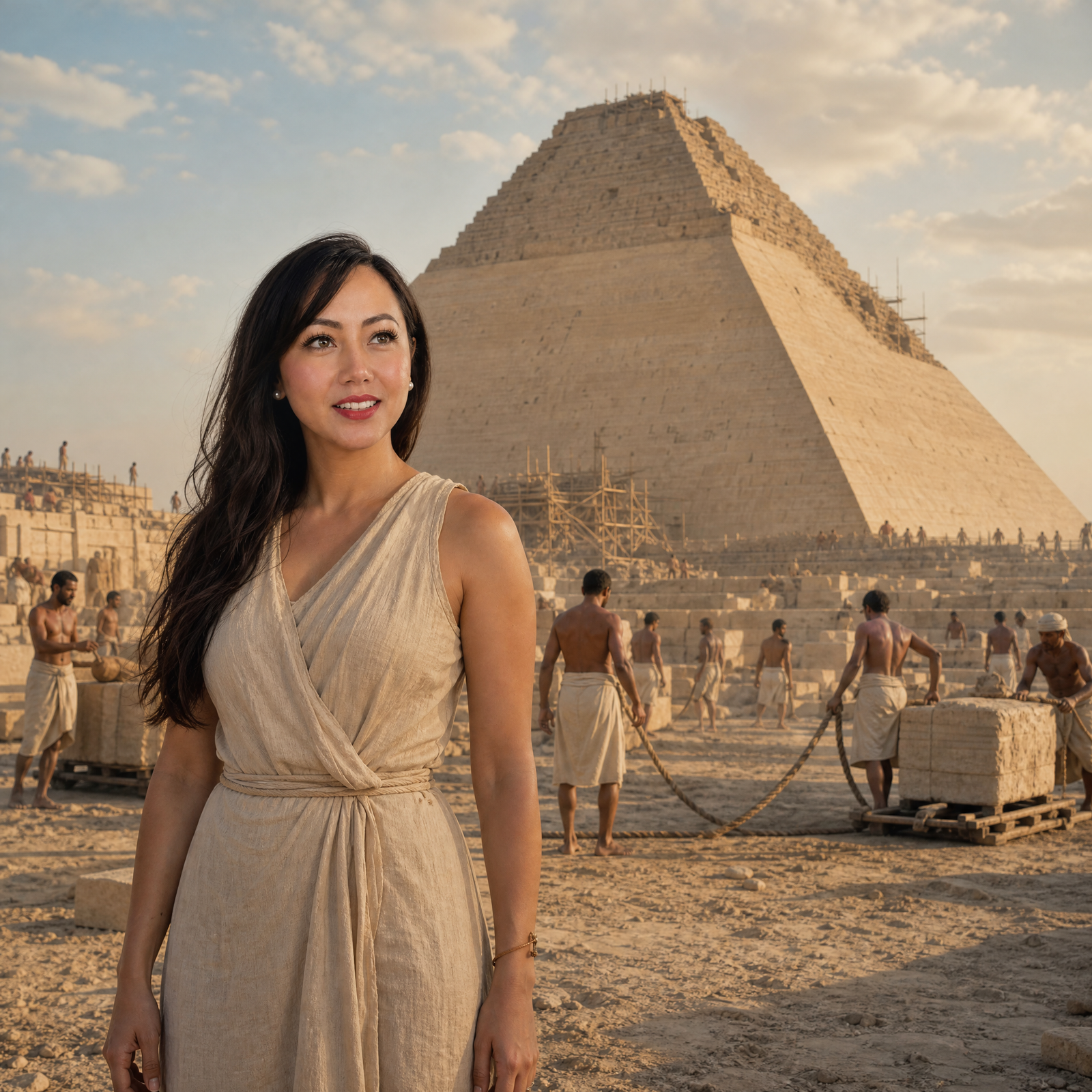
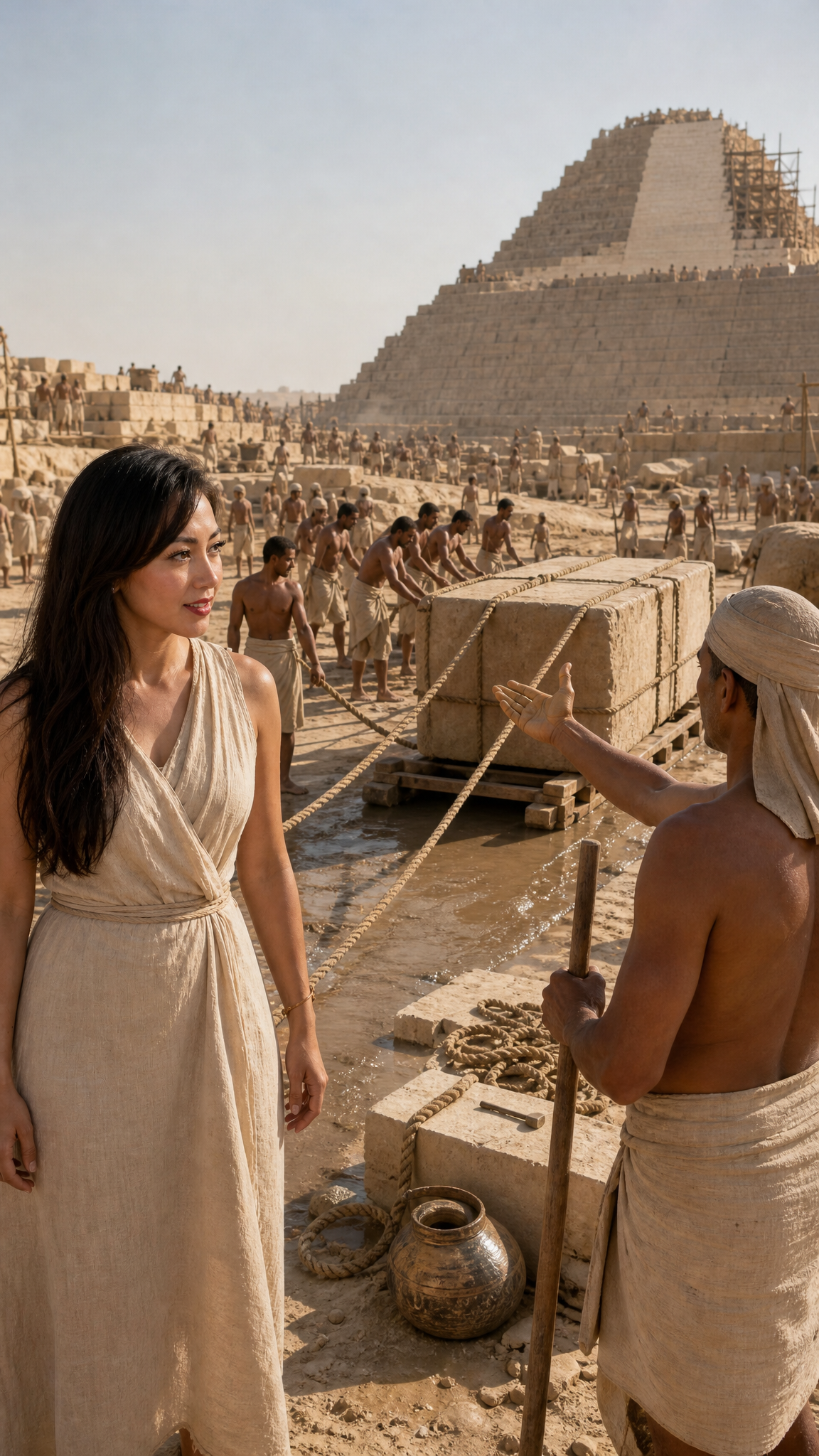
Mellisa arrives on the Giza Plateau during the reign of Khufu, when the Great Pyramid is still a massive construction project rather than the weathered monument we know today.
The landscape is organized around people, stone, transport and logistics. Crews work within a highly coordinated system while materials move toward one of the largest building projects ever attempted in the ancient world.
Limestone formed most of the pyramid’s core and casing, while granite was used in important interior spaces. Evidence from Giza and nearby sites reveals organized labor communities, food production, administration and specialized work supporting construction.
Archaeology can show us much about the workforce, materials and organization behind the monument. The exact system used to raise every block to its final position, however, remains debated.
Building the Great Pyramid
An enormous logistical operation
The pyramid was not simply a pile of stone. Its construction depended on planning, quarrying, transportation, skilled labor and a larger royal complex.
Prepare the site
Builders established the monument’s position and prepared the plateau for a project requiring exceptional precision and organization.
Quarry and transport stone
Large quantities of limestone and other stone had to be extracted, moved and delivered to the construction zone.
Raise the monument
Workers placed enormous numbers of blocks as the pyramid rose. Scholars continue to debate the exact lifting and ramp systems used through every stage.
Build a royal complex
The Great Pyramid belonged to a wider funerary landscape that included temples, causeways, subsidiary pyramids and other structures.
MTT Original
Watch Mellisa’s Great Pyramid Adventure
Start with the original Mellisa Time Traveler journey to ancient Giza, then explore the evidence behind the monument and the people who built it.
Watch the History
Explore the Great Pyramid with Digital Giza
Go deeper into the archaeology of the Giza Plateau and compare what researchers can reconstruct with the world Mellisa encounters in the MTT adventure.
What to notice
Look at the Great Pyramid as part of a much larger archaeological landscape rather than as an isolated monument.
Pay attention to the relationship between the pyramid, surrounding structures, workers, transportation and the organization required to sustain such an enormous project.
Supporting resource: Digital Giza / Giza Project. The embedded video remains hosted by YouTube and its original publisher.
What to Notice
The wonder is not only its size
Notice the organization behind the monument: quarrying, transportation, food, administration, skilled trades and thousands of individual tasks had to work together.
The Great Pyramid was built for Khufu as part of a larger royal funerary complex, not as a monument standing alone in an empty desert.
Archaeologists have learned a great deal about the workforce and construction environment, but the exact method used to raise every stone remains uncertain. MTT does not present one disputed reconstruction as proven fact.
Visit This History Today
Walk the Giza Plateau
The Great Pyramid still dominates the Giza Plateau today. Visitors can experience the pyramid complex, surrounding monuments and the landscape that once supported one of the ancient world’s most ambitious building programs.
Viator
Giza Pyramids, Saqqara & Dahshur
Explore a broader pyramid experience that includes Giza alongside other major pyramid sites around Cairo.
Explore on Viator →GetYourGuide
Explore the Giza Pyramids
Browse a Cairo experience featuring the Giza pyramid complex and other major historic sites.
Explore on GetYourGuide →Mellisa Time Traveler may earn a commission if you book through these links, at no additional cost to you.
Behind the Adventure
How MTT Brings History to Life
Mellisa Time Traveler begins with historical research and then turns archaeological evidence into an immersive journey through the past.
Research the Evidence
Archaeology, monument studies, historical context and material evidence establish what can safely be shown.
Reconstruct the World
The plateau becomes a working landscape filled with stone, crews, logistics and activity rather than an empty archaeological site.
Protect the Uncertainty
Where researchers still debate construction methods, MTT keeps those uncertainties visible instead of inventing a definitive answer.
Creator Resources
Behind the tools
Behind MTT
See how research, storytelling and production come together.
Explore Behind MTTArtlist
Explore music and creative tools used by creators.
Explore ArtlistVideoExpress AI
Explore an AI-assisted creator tool.
Explore VideoExpress AIVideoExpress AI is an affiliate partner. Mellisa Time Traveler may earn a commission if you choose to use this link, at no extra cost to you.
Keep Traveling
Some monuments survive. Their questions survive with them.
Continue exploring Mellisa Time Traveler adventures.
Explore More Episodes